Thursday, May 15, 2014

Ivy League Confederates: Columbia and Yale Et Al

It would surprise some to learn that 20 percent of all Harvard alumni who served in the Civil War fought for the South (357 - Crimson Confederates, Helen Trimpi) and that those serving in the Confederate military included five major generals and eight brigadier generals, three of whom were killed in battle.  Major General Richard Taylor who attended Harvard and Yale (1845) served throughout the war commanding many Louisiana units, including the famous "Tigers", and defeated (humiliated) Union General Nathaniel Banks during the Red River campaign in 1864.

More than 500 Yale men served the Confederacy in some capacity (Yale's Confederates - Nathaniel Hughes).  Graduate Judah Benjamin was the Confederacy's Secretary of State and Secretary of War.  Samuel Morse was a prominent public opponent of Lincoln and Emancipation.  Senator John Calhoun was a prominent advocate for the Fugitive Slave Law and opponent of abolition.  Eli Whitney invented the cotton gin which set the stage for industrial scale cotton production and slavery in America.  It is remarkable to read Whitney's letters concerning the invention and his schemes for plantations in the South and encounter the utter disregard for slave labor he was enabling and personally exploiting.

Princeton University had a very strong to connection with the South. According to the Princeton Alumni Weekly over 200 Princeton alumni enlisted in the Confederate service, including at least seven brigadier generals.  John C. Breckinridge, US Vice President and Confederate general, attended Princeton (1838-39) for graduate study.  "U.S. Supreme Court justice James Wayne 1808 concurred in the Dred Scott decision that claimed black Americans had 'no rights which the white man was bound to respect.'”  Twenty-two ante-bellum US Senators were educated at Princeton, including Alfred Iverson who "gave ferocious speeches threatening secession."  Rev. George Armstrong 1832 wrote The Christian Doctrine of Slavery in 1857, arguing that slaves enjoyed better protections against capitalist exploitation by the rich than did poor whites in the North. http://paw.princeton.edu/issues/2011/03/23/pages/4092/index.xml

Richard Sears McCulloh, scion of an old Scots Protestant Maryland family, graduate of Princeton and Columbia University professor of chemistry was possibly the New York City draft riots principal arsonist.  He turned up in Richmond after the riots, offering to make weapons of mass destruction for the  Confederacy.  He eventually weaponized poison gas, but not in time for it to be used in the war.

Columbia University's most famous Confederate was John Slidell, a New Yorker who transplanted to Louisiana and became a US Senator.  Slidell became involved with the Trent Affair after being appointed Confederate emissary to France when he was captured by the Union while transiting the Atlantic aboard British steamer RMS Trent.  August Belmont, leader of the North's "loyal" Democrats and American agent for the Rothschilds, became Slidell's protégé after he married Slidell's niece.

The notorious Bradish Johnson also should be numbered among Columbia's Confederates.  Johnson was the business partner of  Moses Lazarus, father of poet Emma Lazarus.  Johnson & Lazarus owned sugar refining and distilling operations in New York City and dairies that used the distillery byproducts to feed the cows.  The Johnson & Lazarus "swill" milk that allegedly killed thousands of New York children became the subject of Frank Leslie's famous muckraking expose.  The sugar for the distilleries came from plantations Johnson owned in Louisiana.  During the Civil War Johnson had the audacity to petition Lincoln to readmit Louisiana as a slave state, and sued the Union army for "plundering" his plantations.

Like Columbia, Brown is less forthcoming about its Confederate army sons, but Brown has done a remarkable job exposing its and Rhode Island's deep and profitable involvement with the slave trade.
http://www.brown.edu/Research/Slavery_Justice/report/

Arguably, The University of Pennsylvania's most prominent Confederate was James Murray Mason (1818), Confederate envoy to Britain, who was caught up in The Trent affair with Slidell.  However,  alumnus General John C. Pemberton, CSA, surrendered his army to Grant at Vicksburg, Miss., July 4, 1863.  Teddy Roosevelt's uncle Irvine Bulloch left Penn to serve on the Confederate raider Alabama, which his brother James, the Confederacy's agent in England, had procured to wage war on the high seas against the Union.
https://ia600307.us.archive.org/21/items/universityofpenn01jord/universityofpenn01jord.pdf

Wednesday, April 9, 2014

New York City's Soldiers Monuments

The Soldiers’ Monument at Green-Wood Cemetery, erected only four years after the end of the Civil War, was an early monument but not the first in the city. In 1866, the City of New York erected a monument at Calvary Catholic Cemetery in Queens, which has the identical four statues as Green-Wood, except that they are cast in bronze, almost certainly from the same sculptures by Daniel Draddy. These “public” monuments, located in two large cemeteries outside Manhattan, were fitting commemorative gestures to honor the many veterans who were in fact continuing to die in some numbers due to wounds and disease incurred during the still recent war between the states. Some of the dead were also brought home from distant battlefields.

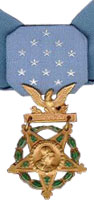
200,000 soldiers and sailors from New York City fought for the Union.  20,000 of them died while serving the Union and over 200 were awarded the Medal of Honor.  More than half of New York City's soldiers and sailors were immigrants with the largest group being Irish.

Green-Wood Soldiers' Monument


https://www.green-wood.com/2010/civil-war-soldiers-monument-saved/

Calvary Cemetery Soldiers' Monument

Photo of the Soldiers Monument in Calvary Cemetary, Queens

Scupltor:  Daniel Draddy

http://www.nycgovparks.org/parks/Q224/monuments/1467


Monday, March 17, 2014

The Last Irish Medal of Honor

The Times interesting story about Okinawa and its version of "Danny Boy" by Isamu Shimoji and Yukito Ara missed the unique connection between that Emerald Isle and New York's Irish.  New York's  fabled "Fighting Irish" 69th regiment won its last Medal of Honor for valor above and beyond the call of duty on April 28, 1945 when Pfc Alejandro Ruiz single-handed stormed and captured a heavily defended Japanese position.   A representative of the 69th read Joyce Kilmer's "The Rouge Bouquet" at Ruiz's funeral in 2010 while a piper played the regimental song "Gary Owen."


Monument to the Irish Brigade at Gettysburg


Above the "Mourning Wolfhound Irish Brigade Monument" at Gettysburg.   On Okinawa the Irish Brigade aka the "Fighing Irish" 69th NYNG fought as the 165th Infantry Regiment.

http://www.nytimes.com/2014/03/17/opinion/the-flute-the-flute-is-calling.html


IN a wood they call the Rouge Bouquet
There is a new-made grave to-day,
Built by never a spade nor pick
Yet covered with earth ten metres thick.
There lie many fighting men,        5
  Dead in their youthful prime,
Never to laugh nor love again
  Nor taste the Summertime.
For Death came flying through the air
And stopped his flight at the dugout stair,        10
Touched his prey and left them there,
  Clay to clay.
He hid their bodies stealthily
In the soil of the land they fought to free
  And fled away.        15
Now over the grave abrupt and clear
  Three volleys ring;
And perhaps their brave young spirits hear
  The bugle sing:
“Go to sleep!        20
Go to sleep!
Slumber well where the shell screamed and fell.
Let your rifles rest on the muddy floor,
You will not need them any more.
Danger’s past;        25
Now at last,
Go to sleep!”
There is on earth no worthier grave
To hold the bodies of the brave
Than this place of pain and pride        30
Where they nobly fought and nobly died.
Never fear but in the skies
Saints and angels stand
Smiling with their holy eyes
On this new-come band.        35
St. Michael’s sword darts through the air
And touches the aureole on his hair
As he sees them stand saluting there,
  His stalwart sons;
And Patrick, Brigid, Columkill        40
Rejoice that in veins of warriors still
  The Gael’s blood runs.
And up to Heaven’s doorway floats,
  From the wood called Rouge Bouquet,
A delicate cloud of buglenotes        45
  That softly say:
“Farewell!
Farewell!
Comrades true, born anew, peace to you!
Your souls shall be where the heroes are        50
And your memory shine like the morning-star.
Brave and dear,
Shield us here.
Farewell!”

Why is McPherson Anti-Catholic

Andrew Greely, the Jesuit sociologist and author,  once remarked to me about Princeton's James McPherson:  "Why is such an otherwise fine historian so anti-Catholic."  The following raise that question.

"Immigrants were proportionally under-represented in the Union’s armed services...Despite the fighting reputation of the Irish Brigade, the Irish were the most under-represented group in proportion to population, followed by  German Catholics."
       - James M. McPherson, Battle Cry of Freedom, p 606, 1988


"The under-representation of Catholic immigrants can be explained in part by Democratic allegiance of these groups and their opposition to Republican war aims, especially emancipation...Although this group furnished a large number of substitutes and bounty men during the final year of the war — thereby achieving an inglorious visibility — they also furnished a large number of deserters and bounty jumpers."
     - James M. McPherson, Battle Cry of Freedom, p. 607, 1988

The problem with Professor McPherson's remarks start with the Union army never recording the religion of its soldiers.   Who could possibly know how many were, in fact, Catholic.

The second problem is that there are no census records available telling us exactly how many Catholics, or even Irish, were available for military service during America's Civil War.

The last and most egregious problem is that historians including McPherson confuse the Sanitary Commission Report estimate for the number of Irish born soldiers serving in state volunteer units with the number of Irish serving with Union forces.  The Sanitary Commission Report estimate did not include soldiers in regular army units, nor most from the territories, nor militia units and excluded all the marines and sailors.  Moreover, as acknowledged in the Sanitary Commission report the Union army did not record place of birth for 43 percent of the soldiers.  Not surprisingly, the highest levels of failure to record were in states with the highest concentration of immigrants: Massachusetts, New York, and Pennsylvania.
(http://hidden-civil-war.blogspot.com/2013/11/the-unions-irish-soldiers-and-sailors.html)

At the University of Virginia, for example, misrepresenting a source is considered academic fraud:
    False Citation: False citation is falsely citing a source or attributing work
    to a source from which the referenced material was not obtained.  
    A simple example   of this would be footnoting a paragraph and citing a work
    that was never utilized.

Estimates adjusting for Sanitary Commission omissions and separately on Medal of Honor data put the number of Irish born serving with the Union army and navy at over 200,000, at least 50 higher than the uncorrected Sanitary Commission estimate.

Why did Professor McPherson make such an egregious mistake?   Inherited prejudice.

"I share [with my cousin] a great-great-grandfather who fought in the Civil War.  This man, Jesse Beecher, emigrated from England in 1857 and became a prosperous wheelwright in an upstate New York village....Another clue [to why he served] is provided by the name he bestowed on his first child born in the United States: Henry Ward Beecher, after the famous antislavery clergyman."
       - James M. McPherson, For Cause and Comrades, p 4, 1997

While fans of the Beechers like to remember Harriet and Henry Ward as abolitionists, they avoid mentioning that others in the family were among America's most prominent and rabid anti-Catholics.  Their father Lyman was the author of the widely read anti-Catholic diatribe A Plea for the West, whose fiery sermons instigated the Ursuline Convent Riots in 1834.  In 1855, Beecher's son Edward authored The Papal Conspiracy Exposed,  of which Orestes Brownson observed: "Dr. Beecher is haunted by strange visions of a papal conspiracy against American Protestantism and American liberty, and in his agitated dreams he calls out upon his countrymen to put an extinguisher upon Catholicity."

http://hidden-civil-war.blogspot.com/2013/08/the-generals-and-small-catholic-church.html

http://hidden-civil-war.blogspot.com/2013/08/the-norths-greatest-hispanic-general.html

http://hidden-civil-war.blogspot.com/2013/08/nessun-dorma-fighting-irish-assault.html

Never mind that Princeton University's other name is "Old Nassau", a celebration of William of Orange-Nassau, the Dutch conqueror of England and victor at Ireland's Battle of the Boyne, which sealed the tragic fate of Ireland's Gaelic-speaking Catholic peasantry, writing in stone the proto-Apartheid Penal Laws which oppressed the Irish even into the 20th century.

---------------------------
That the history profession accepted McPherson's egregious canards without objection can be summed up in The New York Times choice of reviewer for the book:  Hugh Brogan, a British historian, whose only objection was to the grey background of the book's maps.
http://www.nytimes.com/books/98/12/06/specials/mcpherson-freedom.html

---------------------------
Make a racist or anti-Semitic remark and you'll lose your job or your business.  Defame the Irish and the Catholics and they award you the Pulitzer Prize.

Tuesday, February 18, 2014

Seyfert McManus & Company

"No they never taught us what was real
 Iron and coke and chromium steel."

Manufacturers of Fine
Dahlgren guns
 
and Builders of the Croton Dam and Aqueduct


Sunday, January 26, 2014

Yale and Darwin

Rev. Merrill Richardson, Yale 1839: "The development theory of Darwin, Huxley, Owen, and others of that school was shown by their own standards to be without foundation in fact or science." 

Tuesday, January 21, 2014

Hispanics: Remapping The Territory

Tracing the "Hispanic" history of the United States is even more complicated than Felipe Fernandez-Armesto, author of Our America, may realize.   One of the most significant soldier-administrators for northern Mexico was in fact Irish.  Hugo Oconor (Hugh O'Conor), "The Red Captain", stabilized the northern territory of Mexico by among other measures establishing garrisons near Tucson and San Antonio to defend against raids by Native American tribes, e.g., the Apache.  In other words, Tucson was established to keep the Apaches and other Native-Americans out of Mexico.  While the Spanish are often simplistically viewed as conquerors, they viewed themselves as coming to America not only for fortune, but also to save souls and protect native peoples from famine and predation by other tribes, the Apache and Aztecs being the most fierce predators.

The real heroes of the Mexican-American war (the American War to establish slavery in Texas) were the Irish-Catholic soldiers who deserted the U.S. Army to fight for Mexico as the San Patricio Brigade.  Fifty of the Irish soldiers were hanged after the American victory, one of the darkest moments in American history.

In a better moment, Grant sent Phil Sheridan, his fierce little Irish general who had stormed Missionary Ridge, and thousands of African-American soldiers of the XXV Corps, which closed the trap on Robert E. Lee at Appomattox, to the Rio Grande to help Benito Juarez drive the French out of Mexico.  Sheridan left guns and ammunition on the Rio Grande for Juarez, and then allowed his soldiers to "resign" and "volunteer" to serve with the Mexicans fighting the French. The US army volunteers were "designated the American Legion of Honor."   As many as 3,000 American war veterans fought for the Mexican Republic and possibly 2,000 Confederate veterans sided with the Mexican forces aligned with the French.

The North's greatest Hispanic general,  of course, was George Gordon Meade, who defeated Robert E. Lee at Gettysburg.

http://hidden-civil-war.blogspot.com/2013/08/the-norths-greatest-hispanic-general.html

Only Carlos Fuentes and Cervantes have explored the ancient roots of the Hispanics, Numantia, and the stormy marriage, some might call it rape, of Celtic Spain with Rome.

*   *   *   *  *

San Xavier del Bac.
August 20, 1775
"I, Hugo Oconor, knight of the order of Calatrava, colonel of infantry in His Majesty's armies and commandant inspector of the frontier posts of New Spain
Certify that having conducted the exploration prescribed in Article three of the New Royal Regulation of Presidios issued by His Majesty on the tenth of September 1772 for the moving of the company of San Ignacio de Tubac in the Province of Sonora, I selected and marked out in the presence of Father Francisco Garces and Lieutenant Juan de Carmona a place known as San Agustin del Tucson as the new site of the Presidio. It is situated at a distance of eighteen leagues from Tubac, fulfills the requirements of water, pasture, and wood and effectively closes the Apache frontier. The designation of the New Presidio becomes official with the signatures of myself, Father Francisco Garces, and Lieutenant Juan de Carmona, at this mission of San Xavier del Bac, on this twentieth day of August of the year 1775."
Hugo Oconor
Fray Francisco Garces
Juan Fernandez Carmona